Steam’s overall average price in this dataset sits at $3.61, with 1,853 free games and 5,608 paid games in the pricing pool. That headline sounds dirt cheap, but averages can lie: the games players rave about here cluster less around “free” and more around the $1.99 to $9.99 band, where tiny indies can still look like steals without pricing themselves into the bargain-bin void.

If you want the short version, it’s this: ultra-low pricing still works for small indies, but only when the pitch is instantly readable. A $1.99 game needs to explain itself in one sentence. A $9.99 game needs to prove it has enough personality, polish, or replay value to avoid feeling like a gamble.
The market average is $3.61, but the interesting action is above it
The pricing snapshot gives us three anchors:
- Average price: $3.61
- Free games: 1,853
- Paid games: 5,608
That average is low enough to suggest Steam is still flooded with inexpensive software, but the standout indies in this set don’t all pile up at the exact average. Instead, they spread across a few clear value bands: $1.99, $3.95 to $5.99, and $7.49 to $9.99.
That matters because players don’t buy “average price.” They buy specific promises. A minimalist toy can thrive at $1.99. A niche but polished action game can ask $7.49. A puzzle game with over 100 levels can stretch to $9.95 if the reviews back it up.
The $1.99 tier is still absurdly strong for tiny indies
Let’s start at the basement, because this is where indie pricing gets most interesting.
Gordy and the Monster Moon costs $1.99, has 75 reviews, and sits at 100.0% positive with 10,000 estimated owners. That’s a bite-sized exploration game about a pumpkin astronaut, and the price tells you exactly what it is: short, approachable, low-risk.

Desert Golfing is also $1.99, with 99 reviews, 99.0% positive, and 10,000 estimated owners. “Golfing across an endless desert” is basically the whole pitch, and at two bucks, that kind of elegant minimalism feels honest rather than slight.
These games show why the $1.99 tier still works:
- The concept is immediate.
- The commitment is tiny.
- The review scores are elite: 100.0% and 99.0%.
- The owner estimates are modest but real at 10,000 each.
The skeptical angle: $1.99 is not automatically smart pricing. It can also signal disposable design. Here, it works because both games have near-perfect reception. Without that level of clarity and goodwill, low pricing just makes a game easier to ignore.
Around $4 to $6 is where indie pricing looks healthiest
If there’s a true “indie comfort zone” in this list, it’s the middle band. Not bargain-basement, not premium-aspiring — just enough to imply substance without asking for trust the game hasn’t earned yet.
Sparedevil lands at $3.95 with 62 reviews, 100.0% positive, and 10,000 estimated owners. That’s an arcade FPS built around bowling chaos, and the player feedback is exactly what you want for this price: “an absolute blast,” “pick up and play,” and, bluntly, “bowling if it was good.”

The price feels calibrated to the pitch. At $3.95, you’re not promising a massive campaign. You’re promising a sharp gimmick, leaderboard energy, and enough style to make the weirdness worth clicking on.
Ballads of Reemus: When the Bed Bites costs $4.99, with 96 reviews, 99.0% positive, and 10,000 estimated owners. A fully voice-acted cartoon point-and-click with animated cutscenes, side quests, and 36 voice acted characters for five bucks is the kind of pricing that still makes indie PC feel fun.
Kaiju Big Battel: Fighto Fantasy is $5.89, with 57 reviews, 100.0% positive, and 35,000 estimated owners. It promises 12+ hours of RPG adventure, seven main playable heroes, six time periods, and no paid DLC. For under six dollars, that’s old-school value.
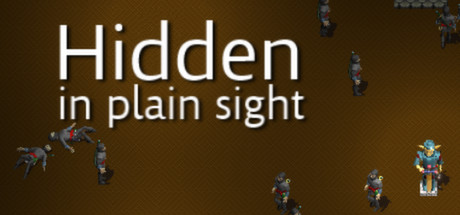
Hidden in Plain Sight sits at $5.99 with 921 reviews, 99.1% positive, and 75,000 estimated owners. That’s the strongest proof point in this entire dataset for the mid-tier: a local-multiplayer-only stealth party game from 2014 still pulling a review score above 99% is what happens when a niche game nails its lane and prices itself fairly.
This middle tier does a few things better than $1.99:
- It gives developers room to signal confidence.
- It avoids the “shovelware reflex” some players have toward ultra-cheap games.
- It still feels impulse-friendly.
If I had to pick one pricing band that looks healthiest from this sample, it’s $3.95 to $5.99. That’s where weird, specific indies can still feel like obvious buys.
The $7.49 to $9.99 tier is where quality has to be visible
Once you get close to ten dollars, the expectations change fast. Steam players will still pay it, but the game has to look like more than a curiosity.
BLUE REVOLVER costs $7.49, with 855 reviews, 98.6% positive, and 75,000 estimated owners. For a manic shoot-em-up, that’s impressive durability. The game backs up the higher price with adaptive difficulty, 5 stages, 3 playable characters, 12 special weapons, 25 single-stage challenges, online leaderboards, and replays.
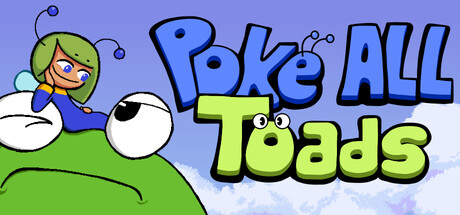
Poke ALL Toads asks $9.95, with 107 reviews, 100.0% positive, and 10,000 estimated owners. That’s near the top of this sample’s range, but it comes with over 100 levels, a distinct cartoony art style, and reviews that praise “well defined rules,” “beginner friendly” puzzle design, and forgiving fairy-switch pauses for timing-heavy moments.

Pizza Game goes even slightly higher at $9.99, with 341 reviews, 98.8% positive, and 35,000 estimated owners. A comedy visual novel with roughly 185k words, 6 romance routes plus a True Route, and extra mechanics like QTEs and investigations can justify that ask better than most joke-premise indies.
The lesson here is simple: $9.99 is not expensive in absolute terms, but it is expensive relative to a market averaging $3.61. If you charge nearly triple the average, players want visible scope.
So are indie games getting more expensive?
The honest answer from this dataset is: not conclusively.
We have the current market average of $3.61, and we have games released from 2015 through 2026 priced from $1.99 to $9.99. What we can say is that inexpensive indie pricing clearly hasn’t disappeared. A 2026 release like Poke ALL Toads is $9.95, while a 2024 release like Sparedevil is $3.95, and a 2023 release like Gordy and the Monster Moon is $1.99.
That spread suggests there isn’t one universal inflation curve for indies. There are multiple lanes:
- Tiny, focused projects staying at $1.99
- Distinct niche games clustering around $3.95 to $5.99
- More content-heavy or polished packages reaching $7.49 to $9.99
So yes, some indies are charging more than the old “cheap impulse buy” stereotype. But no, the low-price indie hasn’t vanished. Steam still rewards games that know exactly how much they’re worth.
Free vs paid: free gets attention, paid gets clearer expectations
The market has 1,853 free games versus 5,608 paid games in the pricing data. Paid games still dominate the sample by count, which matters because Steam’s indie economy isn’t purely racing to zero.
That’s good news for developers, and honestly for players too. Free games can attract downloads, but paid pricing forces a sharper pitch. Every game above works because the cost and concept line up:
- $1.99 for tiny exploration or minimalist sports
- $3.95 to $5.99 for inventive arcade games, adventure games, and party games
- $7.49 to $9.99 for denser systems, more content, or stronger production hooks
There’s a reason Hidden in Plain Sight, BLUE REVOLVER, and Pizza Game can hold 921, 855, and 341 reviews respectively at paid prices. Players will spend money when the game’s identity is crisp.
Best value tiers, ranked
If you’re shopping by price rather than genre, this sample points to a few clear tiers.
Best impulse-buy tier: $1.99
- Gordy and the Monster Moon — 75 reviews, 100.0% positive
- Desert Golfing — 99 reviews, 99.0% positive
- Best for: tiny experiments, elegant concepts, low-risk curiosity clicks
Best overall value tier: $3.95 to $5.99
- Sparedevil — 62 reviews, 100.0% positive
- Ballads of Reemus: When the Bed Bites — 96 reviews, 99.0% positive
- Kaiju Big Battel: Fighto Fantasy — 57 reviews, 100.0% positive
- Hidden in Plain Sight — 921 reviews, 99.1% positive
- Best for: the sweet spot between affordability and perceived substance
Best premium-small-indie tier: $7.49 to $9.99
- BLUE REVOLVER — 855 reviews, 98.6% positive
- Poke ALL Toads — 107 reviews, 100.0% positive
- Pizza Game — 341 reviews, 98.8% positive
- Best for: games with enough content or craft to survive stronger scrutiny
The Verdict
Steam’s pricing average of $3.61 makes the storefront look cheaper than it really feels when you’re shopping for standout indies. The strongest games here don’t all chase the floor. They price to match their shape.
The real sweet spot looks like $3.95 to $5.99: cheap enough to feel inviting, expensive enough to signal confidence. $1.99 still rules for tiny, laser-focused indies, while $7.49 to $9.99 works when a game can point to real scope, replayability, or polish.
The bad trend to watch isn’t “indies are too expensive.” It’s the opposite: some developers still underprice themselves so aggressively that their games risk looking throwaway. In a store with 83,123 total games, price isn’t just a number. It’s part of the pitch.
Which price point actually gets your click these days: $1.99, $4.99, or $9.99?