
Spending less than a fiver on Steam usually means accepting one of two things: either you’re buying a joke, or you’re buying something old enough to have already made its case. These games are the better third option — small, sharp, memorable indies that know exactly what they’re doing and don’t waste your time.
That’s the real hook here. Not “value” in the vague bargain-bin sense, but games with a clear fantasy, a distinct feel, and enough craft to justify the recommendation even before the low price starts looking ridiculous.
I’m also keeping the scale consistent. This isn’t a list that pretends a tiny 75-review curiosity and a long-canon indie classic are competing for the same lane. These are all sub-£5 indies, but they split neatly into two kinds of steals: compact newer discoveries and modern small-scale favorites that still feel underpriced.
The tiny discoveries that feel like you found them first
Gordy and the Monster Moon is the easiest sell here if your ideal weekend game is short, secretive, and a little bit odd. It’s an exploration-driven adventure about a pumpkin astronaut wandering the “Monster Moon,” poking through spooky biomes, finding upgrades, unlocking shortcuts, and swatting danger away with a cobweb.
At $1.99, what you’re buying is mood and curiosity more than raw hours. The strongest player comment in the set nails it: this is a “cute little retro exploration game with secrets that become apparent the more familiar you become with the world and its rules,” and that’s exactly why it works. It sounds tiny because it is tiny, but “bite-sized” isn’t code for empty here — it’s a promise that the game respects your afternoon.
Its 75 reviews with a 100.0% positive score matter because this kind of small project usually lives or dies on charm. The hook is strong enough that players are finishing it quickly and coming away delighted, which is exactly what you want from a micro-priced game.

If Gordy and the Monster Moon is a little haunted toybox, Sparedevil is a sugar-rush arcade cabinet with a concussion hazard. It’s an FPS built around bowling logic: smash down formations of enemy pins, chase strikes and spares, chain combos, rank up your score multiplier, and keep the whole thing moving at a pace that feels closer to score attack than campaign shooting.
This is the kind of idea that could have died as a one-line joke. “Bowling FPS” is funny for five seconds; the game has to survive the sixth. The good news is that, at $3.95, it apparently does. One review simply says, “I finally ‘get’ bowling,” which is funnier than most trailers and more convincing. Another calls it “the next ‘pick up and play’ game you didn’t know you needed,” and that’s the real angle: not novelty for novelty’s sake, but a weird premise backed by actual arcade legs.
Its 62 reviews at 100.0% positive suggest the pitch isn’t just landing ironically. People seem to genuinely like the feel of it — the speed, the combo-chasing, the leaderboard hunger, the absurd enemy roster. If anything, the only caution flag is that it’s laser-focused. If you need variety or a slow burn, this probably isn’t your lane. If you want a game that barges in, yells “bowling if it was good,” and leaves before overstaying, it’s a steal.
Moonleap is cheaper than a coffee at $3.59 and far more likely to make your brain do something interesting. It’s a puzzle-platformer with one excellent idea: each jump flips the world from day to night, changing the level state and forcing you to think spatially, rhythmically, and sometimes a little sideways.
That could have been enough for a neat prototype. What makes it recommendation-worthy is that the game appears to understand the difference between “simple” and “thin.” It has 64 handmade levels, optional secrets, multiple playable characters, and reviews that keep circling back to the same point: the puzzles are creative, surprising, and challenging without collapsing into nonsense.

The 1,324 reviews at 99.1% positive give it more weight than a lot of tiny puzzle games ever get. That score says the central mechanic isn’t just clever on paper — it sustains a full game. For under £5, that’s exactly the sweet spot: one great idea, explored properly.
Then there’s OxU, which goes in the opposite aesthetic direction. It’s a minimal 3D puzzle game built around portals, cubes, lasers, and electrical circuits, with 77 levels and a deliberately clean presentation that puts all the pressure on spatial reasoning.
At $1.99, this is almost aggressively unpretentious. No grand narrative, no genre mashup, just a stack of contained brainteasers with relaxing music and enough mechanical layering to keep it from feeling like tutorial fodder. The reviews point to exactly what puzzle fans want to hear: chill atmosphere, but real “think differently” moments.
Its 235 reviews at 99.1% positive make it easy to recommend if you like your puzzles stripped down and readable. The only skepticism I’d add is that “minimalist” can also mean emotionally flat if you need more personality from your games. But if your idea of a bargain is a clean design exercise that actually trusts you to solve things, OxU is absurdly cheap.
The polished under-£5 indies that still feel underpriced
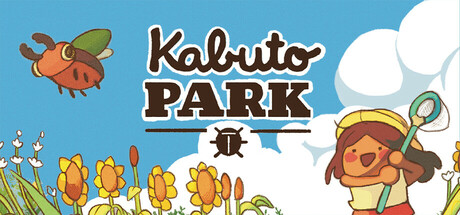
Kabuto Park is the strongest pure “how is this only $4.99?” game in the bunch. You spend a month of summer vacation as Hana, catching bugs, leveling them up, upgrading your gear, and sending your chosen critters into tiny sumo-style battles with light deckbuilding elements.
That pitch sounds cozy because it is cozy, but the game’s best move is restraint. The description flat-out says what it is not: no big adventure, no exploration, no multiplayer sprawl. Just 2 to 4 hours of bug-catching, simple battles, and summer vibes. That honesty matters. Too many small games promise a lifestyle; Kabuto Park promises an afternoon and then tries to make it a great one.
The result is 3,801 reviews at 99.7% positive, which is a ridiculous number for something this small and specific. Players praise the cute art, approachable battles, and relaxing loop, with the main complaint being that it ends too quickly. That’s a fair criticism, but also the kind of complaint that accidentally doubles as a recommendation. People wanted more because the game nailed its lane.
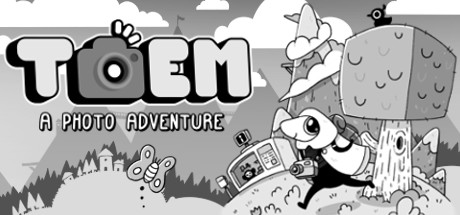
TOEM: A Photo Adventure is $3.99, and if you like gentle puzzle adventures, that price is almost rude. It sends you through a hand-drawn world with a camera, using photography to solve small problems, help oddball characters, and tease secrets out of the environment.
The obvious risk with “wholesome photo game” is that it turns into a vibe machine with no real toy inside it. TOEM avoids that by making the camera the actual verb. You’re not just sightseeing; you’re looking, framing, noticing, and using those observations to unlock progress. That gives the game a stronger sense of interaction than a lot of cozy-adjacent adventures manage.
Its 10,191 reviews at 99.2% positive tell you this isn’t niche goodwill talking. It’s broadly loved, and for good reason. The recent player comments lean on immersion and puzzle satisfaction rather than empty comfort-food praise, which is exactly what you want to hear.
A Short Hike has been recommended so often that it risks sounding overfamiliar, but the $4.39 price is still low enough to make it worth restating the case. You hike, climb, glide, fish, chat with other hikers, and slowly spiral toward the summit of Hawk Peak Provincial Park.
What makes it stick isn’t just that it’s relaxing. Plenty of games are relaxing and instantly forgettable. A Short Hike understands movement as joy: climbing a little higher, gliding a little farther, discovering a little side path you weren’t aiming for. It captures the feeling of a small vacation better than most games with ten times the budget.

The 21,458 reviews at 99.2% positive confirm that this isn’t just critic-approved niceness. People genuinely adore it. One recent review says they had to refund it because they beat it in under two hours, which is both funny and a useful warning: this is short. But if the point is paying under £5 for something memorable, brevity isn’t a flaw by default.
Papa’s Freezeria Deluxe is $4.79 and knows exactly which part of your brain it wants to colonize: the multitasking, order-optimizing, “just one more day” part. You build sundaes station by station, juggle orders, unlock ingredients and seasonal content, and eventually sink into that familiar management-game trance where chaos starts feeling like rhythm.
The key here is tactile structure. Every station has its own hands-on process, so the loop isn’t just abstract queue management. You pour, blend, top, and adjust. It gives the game a busier, more physical feel than a lot of assembly-line sims. Recent players also point out a nice practical detail: it feels especially good on a touchscreen laptop, which tracks for a game this interface-driven.
With 12,627 reviews at 99.2% positive, it’s clearly not surviving on childhood nostalgia alone. The one negative review in the sample mostly reads like raw frustration rather than a broad pattern, while the positive responses point to exactly why these games endure: they’re comforting, compulsive, and immediately readable.
Finally, Shooters, Ready! might be the most interesting recommendation here if you want something a little stranger. It’s an arcade-style FPS built around sport shooting, room-clearing speed, target precision, and unusually heavy recoil, wrapped in a short high-school-girls sports-story framework and a score-focused arcade mode.
That combination could have been a mess. Instead, the reviews suggest a compact shooter with satisfying gun handling and a surprisingly strong grasp of bite-sized structure. Story mode is short — around 30 to 60 minutes according to the description — but the arcade mode is the main attraction, adding card-based upgrades and replayable runs in roughly 10-minute chunks.
Its 732 reviews at 99.5% positive make it more than a curiosity. The caveat is real, though: there’s no native English, one review notes no mouse inversion setting, and the game doesn’t support gamepads. Those are not tiny accessibility footnotes. But if you can work around them, $4.99 for a sharply tuned, unusual score-chaser is hard to argue with.
Why these prices matter
Cheap games don’t automatically become good deals just because they cost less than lunch. A bad two-dollar game is still a bad game; it just wasted less money. What makes these stand out is that each one has a clean, legible reason to exist.
- Gordy and the Monster Moon is for short-form exploration fans who want mystery over scale.
- Sparedevil is for score-chasers who miss the feeling of discovering a weird cabinet at the back of an arcade.
- Moonleap and OxU are for puzzle players who’d rather have one great mechanic than ten half-baked systems.
- Kabuto Park, TOEM: A Photo Adventure, and A Short Hike are for players who want warmth without bloat.
- Papa’s Freezeria Deluxe is for management-loop obsessives.
- Shooters, Ready! is for anyone craving a compact shooter that doesn’t feel factory-made.
That’s the common thread. None of these games are trying to be endless. They’re trying to be specific.
The Verdict
If I had to pick the best pure bargain, Kabuto Park is the standout: a tiny, laser-focused collectible battler with one of the strongest review profiles on this list and a pitch that feels fresh rather than algorithmically “cozy.”
If I had to pick the safest recommendation, A Short Hike still earns its reputation because the movement and mood are that good.
If I had to pick the most fun surprise, Sparedevil wins on sheer “this should not work this well” energy.
And if you want the most game-design-per-dollar, Moonleap and OxU are ridiculously hard to beat.
Under £5 is usually where expectations go to die. Which of these would you actually spend your last fiver on?