Steam’s indie catalog is still brutally Windows-first: 82,207 tracked games support Windows, versus 16,437 on Mac and 11,397 on Linux. That means Mac support shows up in roughly 20% of tracked games, and Linux support in roughly 14%—small slices, but big enough now that cross-platform support is no longer a niche courtesy.
For indie players, that matters because platform support increasingly signals intent. A studio shipping on Windows, Mac, and Linux is usually thinking harder about portability, accessibility, and long-tail audience reach than a developer tossing out a Windows-only build and moving on.

The real story isn’t volume. It’s commitment.
The raw market numbers are lopsided. Out of 83,123 total tracked games, Windows support covers 82,207 titles, while Mac and Linux trail far behind at 16,437 and 11,397.
That gap is obvious enough. What’s more interesting is that among small indie releases, cross-platform support often clusters around games built for readability, lower hardware demands, or cleaner input design—text adventures, puzzle games, board games, visual novels, and compact action games.
That’s not glamorous, but it is practical. If you’re a MacBook player, a Steam Deck tinkerer, or a Linux desktop diehard, you’re much more likely to get a polished experience from a carefully scoped indie than from a flashy, under-optimized trend-chaser.
Three-platform support is still a flex
Let’s start with games that ship on Windows, Mac, and Linux without charging much, because that combo is still rarer than it should be.
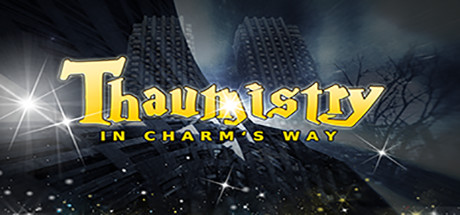
Thaumistry: In Charm’s Way costs $3.99, supports all three desktop platforms, and sits at 59 reviews with a perfect 100.0% positive score. That’s a tiny review count, sure, but for a 2017 comedy text adventure, three-platform support makes perfect sense: parser games live or die on stability, readability, and low friction, and this one also includes Steam Cloud, achievements, and screen reader-friendly NVDA support in its description.
The accessibility angle matters here. A text adventure with customizable fonts and colors, an in-game map, and a context-sensitive hint system is already trying to reduce friction; shipping that design to Windows, Mac, and Linux is the logical next step rather than a marketing bullet point.
Gordy and the Monster Moon takes a different route. It’s a $1.99 action-adventure from 2023 with 75 reviews at 100.0% positive, estimated at 10,000 owners, and it also supports Windows, Mac, and Linux.
That price-to-polish ratio is hard to argue with. Twinbeard didn’t just ship a cheap curiosity here—they paired broad platform support with full controller support and Remote Play Together, which makes the game feel built for actual player convenience instead of bare-minimum compatibility.
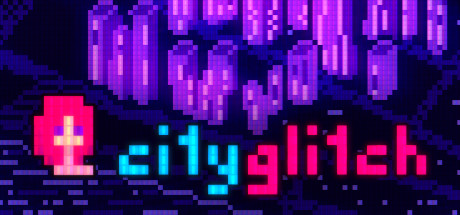
cityglitch is even more aggressive on accessibility through price: it’s free, supports Windows, Mac, and Linux, and holds 51 reviews at 100.0% positive with an estimated 10,000 owners. For a bite-sized puzzle game with 95 levels, optional low graphics mode, cloud saves, and a resizable window, that’s exactly the kind of low-spec, low-risk indie Mac and Linux players should be hoarding.
Then there’s Sable’s Grimoire: A Dragon’s Treasure, a $3.89 visual novel with 69 reviews and a 100.0% positive score across Windows, Mac, and Linux. What stands out isn’t just platform support—it’s the feature list: adjustable text size, keyboard-only option, mouse-only option, and playable-without-timed-input support.
That’s the kind of package more indies should copy. If you’re already making a story-heavy game with a 168k word count and four endings, failing to support multiple operating systems would be a weird own goal.
Hnefatafl rounds out this group at $2.99, with 51 reviews at 100.0% positive across Windows, Mac, and Linux. Its cross-platform multiplayer is the headline feature here, because multiplayer support across desktop operating systems is still more meaningful than simple single-player compatibility.
For a strategy game built around online play, tournaments, and ranked matches, cross-platform support isn’t just nice—it keeps a small player base from fragmenting into platform silos. Small indies can’t afford that kind of split, and this game seems to understand it.
Pixel With Your Friends is another smart example. It launched in 2024 at $1.99, supports Windows, Mac, and Linux, includes online co-op and cross-platform multiplayer, and has 83 reviews at 100.0% positive.
This is where platform support stops being abstract and starts being social. A co-op coloring game only works cleanly if “my friend is on Mac” isn’t a problem, and SkyCat Games clearly treated that as a core product decision, not an afterthought.
Seiga Kaku uses her amazing Taoist arts and gives you a life lesson is the strangest game here, and maybe the best argument for why niche platform support matters. It’s $0.49, supports Windows, Mac, and Linux, and has 82 reviews at 100.0% positive.
No, this is not a mainstream breakout. But weird, tiny, deeply specific indies are exactly what Mac and Linux players often lose first when platform support gets trimmed, so seeing a micro-priced visual novel ship broadly is a good sign.
Linux support still skews toward focused design
Linux remains the toughest sell of the three. With 11,397 tracked games supporting it versus 16,437 on Mac, Linux compatibility is clearly the smaller pool.
But some of the most convincing examples in this set are Linux-supported games that know exactly what they are.
Kaiju Big Battel: Fighto Fantasy is $5.89, supports Windows and Linux, and has 57 reviews at 100.0% positive with an estimated 35,000 owners. A 16-bit styled turn-based RPG with 12+ hours of adventure, difficulty options, cloud saves, achievements, and full controller support is the kind of medium-scope indie that often travels well to Linux because it doesn’t depend on tech bloat to impress.
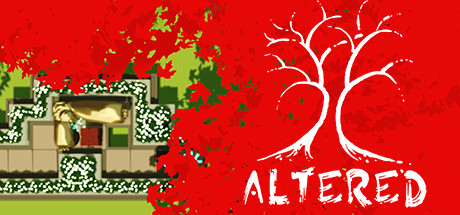
Altered follows the same logic. It’s a $2.99 puzzle-strategy game for Windows and Linux with 123 reviews at 100.0% positive, the highest review count in this group.
That matters because it suggests the broadest proof of traction here without blowing up the article’s scale. More importantly, its pitch—over 80 puzzles, a soothing atmosphere, and character-altering mechanics—fits the pattern: readable systems, modest technical scope, and a design-first identity.
Galactic Thunderdome is the outlier. It’s a $4.99 action game from 2024 with 59 reviews at 100.0% positive on Windows and Linux, but unlike the others, it leans into physics-based chaos, local multiplayer, split-screen PvP, co-op, and up to 8 local players.
That’s ambitious for a tiny indie. It also shows where Linux support gets interesting: not just low-spec puzzle boxes, but multiplayer games trying to make party-friendly PC setups less dependent on one operating system.
What these games get right
The common thread isn’t genre. It’s discipline.
These games mostly avoid the usual indie trap of selling scale before they’ve nailed support. Instead, they pair broad platform compatibility with sensible pricing and features that travel well across systems.
A few patterns stand out:
Three-platform support often shows up in lower-priced indies:
- Gordy and the Monster Moon — $1.99
- Pixel With Your Friends — $1.99
- Hnefatafl — $2.99
- Thaumistry: In Charm’s Way — $3.99
Games with broader platform support often also carry player-friendly features:
- Sable’s Grimoire: A Dragon’s Treasure — adjustable text size, keyboard-only, mouse-only, no timed input
- Thaumistry: In Charm’s Way — hint system, customizable fonts/colors, Steam Cloud
- Pixel With Your Friends — cross-platform multiplayer, online co-op, cloud saves
- Hnefatafl — cross-platform multiplayer, online PvP, tournaments
Linux support appears strongest in games with clear systemic design:
- Altered — puzzle strategy
- Kaiju Big Battel: Fighto Fantasy — turn-based RPG
- Hnefatafl — board strategy
- cityglitch — bite-sized puzzle design
The skeptical bit: 100% positive can hide how small these audiences are
There’s a temptation to look at ten games with 100.0% positive scores and declare cross-platform support a secret quality marker. That would be too neat.
The review counts here range from 51 to 123, with one owner estimate at 35,000 and a couple at 10,000. Those are respectable small-indie numbers, not proof that Mac and Linux support suddenly drives breakout success.
What the numbers do suggest is something more grounded: teams making careful, niche-friendly games are often the same teams willing to support more than Windows. That doesn’t guarantee greatness, but it does usually mean the developer has thought about edge cases, player friction, and audience trust.
And honestly, that’s worth more than a fake “platform agnostic future” sales pitch. Windows still dominates by a mile, and probably will for a long time. But if you’re an indie developer ignoring Mac and Linux entirely, you’re not just skipping extra storefront checkboxes—you may be skipping the exact audience most likely to appreciate your weird little game.
The Verdict
Platform support in indie games is still uneven, but it’s getting more intentional. Windows remains the default with 82,207 tracked games, while Mac at 16,437 and Linux at 11,397 are still minority platforms—but the indies supporting them tend to be thoughtfully scoped, affordable, and unusually considerate in their feature sets.
The best signal here isn’t raw reach. It’s that games like Thaumistry: In Charm’s Way, Altered, Pixel With Your Friends, and Hnefatafl treat platform support as part of the product, not a mercy patch.
That’s good news if you play outside the Windows mainstream. Which indie game has surprised you with unusually good Mac or Linux support lately?