Some Steam weeks are easy to summarize with a genre label. This one isn’t. The most interesting indie momentum right now is coming from games built around a single strong verb — drift, hop, steer, stock shelves, air-strafe — and then pushing that verb until it becomes the whole fantasy.

That’s a healthier trend than another pile of indistinct “cozy,” “survival,” or “roguelike” tags. For the week ending March 29, 2026, the games worth watching aren’t broad category winners. They’re sharp little machines with clear hooks, visible audiences, and just enough friction to make people talk.
Rising Stars
The standout riser is BAIONLENJA. On paper, “movement shooter in a strange facility” sounds like a pitch Steam sees every week. In practice, this one seems to understand the real appeal: not just speed, but teaching players how to feel fast.
Its Steam page leans hard into Source-style movement — B-hopping, air strafing, rocket-jump-adjacent blade jumps, surfing ramps, no speed cap — and the recent player response backs that up. One review calls the movement “super satisfying,” another wants custom map support already, and that’s usually a good sign: players don’t ask for workshops when the core toy is weak. With 338 reviews and 98.8% positive, this isn’t just niche approval. It’s the kind of score that suggests the game is delivering exactly the fantasy it sells.
What helps is that BAIONLENJA doesn’t seem trapped in pure speedrun cosplay. The PS2-era aesthetic, weird mechanoid enemies, and undersea facility premise give the movement a place to live. Plenty of movement indies nail the locomotion and forget to build a world around it. This one appears to know that momentum needs atmosphere.
Another game gaining traction for a completely different reason is Teddy’s Haven - A Fantasy Inspired Shop Simulator. Yes, cozy shop sims are everywhere. No, that doesn’t mean this one should be dismissed.

The pitch is straightforward comfort food: run a magical shop, sell more than 400 items, decorate with 250+ decorations, harvest resources, level up naturally, and exist in a world explicitly designed to be low-conflict. The reason it matters this week is scale of reception within this set: 2,021 reviews at 97.0% positive is not accidental enthusiasm. That’s a real audience finding its game.
The key detail from player feedback is that people aren’t just praising vibes. One player specifically frames it as the apothecary game they’d been searching for, while another notes it works if you like slow-paced relaxing games “with a bit of grind.” That’s important. The hook isn’t merely “cozy”; it’s cozy with structure, inventory rhythm, and a specific fantasy of fantasy retail. A detractor calls it shallow and asset-flip adjacent, which is worth keeping in mind, but the broader response says the loop is landing for the audience it wants.
Then there’s Rosalie, which might be the freshest, funniest proof that co-op chaos still works when the control gimmick is clean enough. Two players share a pedal car: left seat turns left, right seat turns right. That’s the joke, the mechanic, and the source of every argument.

Released on Mar 21, 2026, it’s one of the few genuinely new arrivals here, and its first 38 reviews are sitting at 100.0% positive. Early numbers can flatter almost anything, but the player comments give it texture fast: “screaming at my bf to turn,” “only made it half way before we needed a brake,” and praise for how a simple idea becomes surprisingly complicated in motion. That’s the right kind of endorsement for a co-op game. You don’t want people describing systems diagrams; you want them describing a relationship stress test.
The risk is obvious too. Games built on one joke can burn out quickly if they don’t layer in enough scenarios, surprises, or expressive failure states. But right now, Rosalie looks like it understands the exact distance between “delightfully stupid” and “already over.”
Hidden Gems Found
If you want the week’s clearest budget recommendation, Undercroft Warriors is hard to ignore. It costs $1.49, has 452 reviews at 79.6% positive, and sells itself as an arcade twin-stick shooter about crushing hellspawn for score. That’s not glamorous, but it is honest.
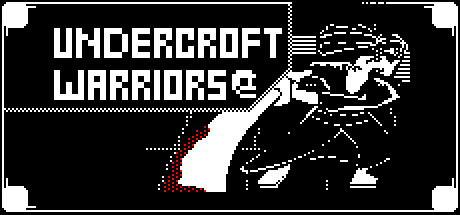
The most useful part of its review context is how plain it is. “Works fine.” “Hard.” “You’re getting what it says on the tin.” Normally that would sound faint. Here it reads like a recommendation, because too many cheap action indies overpromise systems depth and underdeliver feel. Undercroft Warriors appears to know its lane: six heroes, unique abilities, escalating hordes, score multipliers that reward aggression. If you miss old-school score-chasing loops where pressure is the point, this looks like a solid one-more-run machine.
Grumpy Gaffer is another small one worth a look, mostly because it has a stronger identity than its generic screenshots might suggest. The setup — a tired old man defending his peace from irritating neighbors through cloning, mutation, and anti-intruder chaos — is at least more memorable than another faceless lane-defense riff.
At $0.99 with 123 reviews and 94.3% positive, it’s cheap enough to be impulse-buy territory, but the interesting part is the mix. Drag-drop-tap strategy, 90 levels, endless mode, nightmare mode, a smash minigame, weekly coliseum competition, and, for reasons that deserve respect, a fully functional sudoku mode to keep Mr. Gaffer happy. That kind of kitchen-sink design can read messy, but sometimes a bargain-bin indie wins by sheer personality and variety.
For players who want puzzles instead of action, Juufuutei Raden™’s Guide for Pixel Museum looks like a sturdy recommendation rather than a novelty tie-in. Yes, the VTuber framing will be the first thing many people notice. The more convincing hook is that it’s a nonogram game with over 300 puzzles, sizes up to 40x30, and artifact commentary woven into the museum theme.

Its 309 reviews at 98.7% positive suggest it’s not surviving on branding alone. One reviewer says they came mainly for the puzzles but stayed interested in the explanations of represented artifacts; another says, simply, “Its a good picross game.” That bluntness matters. If you like picross, the question is never whether a game is revolutionary. It’s whether the puzzle flow is smooth enough to become your next 50-hour habit. This seems to be.
A more eccentric hidden pick is Blackjack Roulette. The elevator pitch is ridiculous in a way that actually helps: blackjack fused with roulette and Russian roulette, plus roguelike deckbuilding and 1v1 PvP. It could have been empty streamer bait. The good news is the early feedback points to real tactical play in the trump-card system.
At 37 reviews and 94.6% positive, it’s still in “promising curiosity” territory rather than proven hit territory. But the comments point to visible card information, hand-management tension, and enough modifier cards to mitigate bad luck. One reviewer explicitly notes the Buckshot Roulette inspiration, which is both the selling point and the warning label: if you’re tired of horror-casino riffs, this won’t convert you. If you want another nasty little death-game ruleset, it might.
New Arrivals
This week’s actual new-release conversation starts with Rosalie, because it’s the freshest game here with a hook people can explain in one sentence and immediately want to test on a friend. That matters more than sheer novelty. Co-op indies live or die on transmissible stories, and “we rolled backward down a hill while both of us screamed contradictory directions” is a better sales pitch than most trailers.
The other notable recent arrival is Blackjack Roulette, released Mar 20, 2026. It’s not as instantly social as Rosalie, but it’s tapping into a still-hungry audience for compact, high-stakes systems games. The clown-hosted execution chamber premise is lurid nonsense, but sometimes lurid nonsense is useful if the loop underneath has teeth.
A more unusual 2025 release still building word of mouth is WonderLang Polyglot. It’s an RPG-shaped language-learning game, which is a dangerous idea because “educational game” usually means either too gamey to teach or too educational to entertain.
Here, the player feedback is encouragingly grounded. One reviewer with 83 hours is all-in on the concept; another praises it as a different form of comprehensible input; a third says it’s worthwhile without pretending it will magically make anyone fluent. That last point is exactly why this one is interesting. It doesn’t need to replace a course to matter. It just needs to make language practice less dead-eyed than subscription app drills. At $39.99, though, it’s asking for serious commitment, so the audience is probably curious learners rather than dabblers.
What the movement actually means
The useful number this week isn’t “Total games: 83,123.” Nobody boots Steam because a platform is large. The more revealing stat is that only 8 games in this tracked slice are new this week, which makes standout hooks matter even more.
A few patterns emerge fast:
Movement-heavy action is punching above its weight:
- BAIONLENJA: 338 reviews, 98.8% positive
- Undercroft Warriors: 452 reviews, 79.6% positive
- Rosalie: 38 reviews, 100.0% positive
Cozy or low-pressure structure still wins when the fantasy is specific:
- Teddy’s Haven - A Fantasy Inspired Shop Simulator: 2,021 reviews, 97.0% positive
- Juufuutei Raden™’s Guide for Pixel Museum: 309 reviews, 98.7% positive
Cheap doesn’t guarantee goodwill:
- Cursedland: 568 reviews, 72.0% positive
- Caribbean Crashers: 1,365 reviews, 73.0% positive
That last point is worth stressing. Price can get people through the door, but it won’t save a thin hook or a game players read as derivative. Cursedland and Caribbean Crashers both have enough visibility to matter, but the review context suggests skepticism around execution, originality, or depth. In a week where cleaner concepts are connecting, that’s a useful contrast.
What to Watch
If one game here has breakout-next-week energy, it’s Rosalie. The concept is legible, stream-friendly, genuinely funny, and cheap enough at $6.29 to travel fast if clips start circulating. The real question is whether it has enough roads, situations, and escalating complications to turn a good first hour into a recommendation instead of a bit.
BAIONLENJA is the other obvious watch. Games with this kind of movement praise tend to either plateau as cult favorites or explode once speedrunners and challenge hunters adopt them. If custom-map demand turns into community momentum, it could become much bigger than its current footprint.
And don’t ignore Blackjack Roulette. It’s operating in a crowded “deadly tabletop” lane, but the blackjack twist is at least more than cosmetic. If players keep finding real strategy in the card effects and PvP, it could become the week’s sleeper obsession.
Bottom Line
This week’s indie trend isn’t a genre takeover. It’s clarity. The games getting traction know exactly what they want you to do and why it should feel good: rocket-jump through a haunted facility, bicker your way down a hill in a pedal car, build a fantasy shop, solve crisp nonograms, or chase score in a tiny arcade bloodbath.
That sounds obvious, but it isn’t. Plenty of indies drown their best idea in feature creep or trend-chasing mush. These don’t. Which one are you trying first: the movement freakout, the co-op relationship test, or the shop sim comfort blanket?