A rising-star piece only works if the games actually feel alive right now. Not “interesting on paper,” not “maybe someday,” but the kind of small indie releases that already have players poking holes in the rough spots, evangelizing the good stuff, and nudging them toward breakout territory.
This week’s most interesting movers aren’t polished into blandness. They’re messy, specific, and easy to picture in the right hands: a co-op pedal-car disaster machine, a movement shooter built for speed goblins, a language-learning RPG that might actually keep you engaged, and a few more oddballs with real traction behind them.

1) Rosalie
Rosalie has the cleanest hook of the bunch: two players share control of a pedal car, with one player only able to steer left and the other only able to steer right. That’s the kind of design pitch that can either become a one-joke physics gag or a genuinely great co-op toy. Early signs suggest this one has legs.
The trick is that it understands where the fun lives. This isn’t just slapstick wobbling down a path. The full setup mixes steering chaos with pedaling, braking, hills, scenery, and the constant possibility that both players panic at once and make everything worse. That gives the game rhythm: frantic correction, brief recovery, then another avoidable disaster.
At 49 reviews and a perfect 100%, it’s obviously still early, but the player comments are useful because they’re describing the exact fantasy the game sells. People are already talking about yelling at partners, laughing through half-failed runs, and treating each attempt like a tiny relationship stress test. That’s not a side effect; that’s the whole point.
The skeptical read: co-op novelty games burn out fast when they don’t have enough situations to keep the joke evolving. Rosalie is in Early Access, and one review already points out that it currently supports online co-op only. Another wants more playful photo features and partner interactions. Those are fair asks, because this kind of game lives or dies on how many stories it can generate after the first hour.
Still, at $6.29, this looks like one of those rare “streamer bait” setups that also sounds genuinely fun to play yourself. If you miss the era when co-op games were allowed to be a little cruel in service of a good laugh, this one looks promising.
2) BAIONLENJA

Some games sell movement as a feature. BAIONLENJA looks like it treats movement as religion.
This is an atmospheric FPS built around overclocked Source-style tech: bunny hopping, air strafing, surfing ramps, blade jumping, and generally turning an undersea facility into your personal speedrun playground. The smart part is that it doesn’t just assume you’re already in the cult. Its description makes a point of teaching these systems with audio and visual feedback, which matters if you want more than a tiny hardcore audience.
That accessibility seems to be landing. The recurring praise in its recent reviews is simple and strong: the movement feels amazing. One player is already dreaming about custom challenge maps, which is usually a sign that a game’s core verb is doing real work. If people are immediately imagining what else they could do with the mechanics, the foundation is probably solid.
The other thing helping BAIONLENJA stand out is tone. It isn’t chasing clean esports minimalism. It wants weird enemies, PS2-era grime, mysterious fossils, lore-drunk sci-fi nonsense, and the kind of combat where speed itself becomes damage. That’s a much better fit for this movement style than sterile arena shooting. You want a world that feels like it might break under the force of your momentum.
With 338 reviews and 98.8% positive, this is the most convincing “small game becoming a real word-of-mouth thing” case in the lineup. The skepticism here is mostly practical: it’s still Early Access, and movement-first shooters can expose their content limits quickly if the spaces, enemies, and secrets don’t keep pace with the traversal. But right now, the fantasy is extremely clear.
Who should care:
- Players who still think FPS movement peaked years ago
- Anyone who likes mastery without needing a miserable onboarding process
- Speedrunners and movement nerds, obviously
3) R.A.T#200

Tiny stealth games can disappear in a week if they don’t have one memorable angle. R.A.T#200 has one immediately: you’re an experimental lab rat sneaking through a facility where the scientist is always listening.
That’s a good premise because it creates tension without needing huge scope. The game is a stealth point-and-click survival thriller, which means it’s leaning on observation, timing, and puzzle-solving rather than action. The best version of this kind of game makes every click feel risky. Even a small room can feel oppressive if you know one bad move could bring attention down on you.
The available player feedback is modest but useful. One review calls it a short puzzle game that’s “fairly decent” and specifically wishes for WASD movement, which tells you two things: first, it’s landing well enough for players to want smoother controls rather than bouncing off entirely; second, its point-and-click approach may create a little friction for people expecting more direct movement. Another review simply calls it a neat little game, which sounds faint until you remember this is a free release with only 28 reviews so far. “Neat little game” is often exactly how these things start spreading.
At 100% positive, it’s too early to crown it anything. But if you like concise indie horror-adjacent stealth with a sharp premise, R.A.T#200 looks like a smart free pickup before it gets buried by louder releases.
4) Blackjack Roulette

Yes, the pitch is blunt: blackjack plus roulette plus Russian-roulette tension in a grimy death-game wrapper. Normally that would set off the “viral hook, shallow follow-through” alarm. Blackjack Roulette seems more substantial than that.
The reason is the trump-card layer. This isn’t just blackjack with a gun prop taped to it. You’re manipulating hidden information, forcing draws, peeking at cards, swapping bullets, and trying to navigate both probability and bluff pressure at once. That gives the game a real tactical identity instead of reducing it to shock value.
The recent reviews back that up. One calls it a standard Russian roulette-style game with a simple blackjack mechanic, but then goes on to describe visible information, hidden cards, and how the systems fit together. Another explicitly compares it to Buckshot Roulette-style inspiration while saying the card list helps compensate for bad luck. That’s important: if players are already talking about mitigation and outsmarting opponents, the game is doing more than relying on theme.
There is one obvious caveat. One review mentions AI voices, which some players will bounce off on principle and others won’t care about at all. It’s not the whole game, but it is part of the package and worth noting because atmosphere matters a lot in this kind of theatrical horror-card mashup.
At $2.39 and 38 reviews with 94.7% positive, this feels like a strong curiosity buy for people who enjoy roguelike card games but want more menace and less deckbuilder sprawl. If the pitch makes you grin instead of groan, you’re probably the audience.
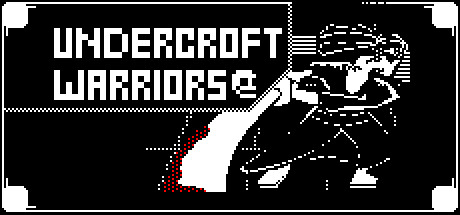
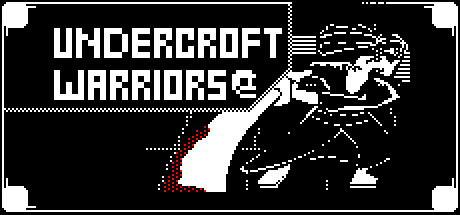
5) Undercroft Warriors
There’s a place on Steam for games that know exactly what they are and don’t waste time pretending to be bigger than they are. Undercroft Warriors is one of those.
It’s a cheap, arcade-inspired twin-stick shooter about mowing through hellspawn, juggling score multipliers, and trying not to lose momentum long enough to get buried by the horde. Six heroes with distinct weapons and abilities is a smart structure for this scale of game. It gives repeat runs a reason to feel different without burying the simplicity under progression sludge.
The reviews are refreshingly plainspoken. “Works fine.” “Hard.” “You’re getting what it says on the tin.” That might sound faintly damning if you want grand statements, but for a $1.49 action game, that kind of honesty is useful. It suggests Undercroft Warriors isn’t winning people over with smoke and mirrors. It’s delivering a clean loop at a low price and letting players decide whether they want one more run.
The 79.6% positive score across 455 reviews is also interesting because it’s less ecstatic than some of the other games here. That makes it easier to trust. This doesn’t read like a sudden overhyped miracle; it reads like a modest, punchy action game finding the exact audience that wants score-chasing pressure and old-school arcade friction.
If you like twin-stick shooters that move fast and don’t ask for a weekend commitment, this one looks like a very easy impulse buy.
6) Grumpy Gaffer
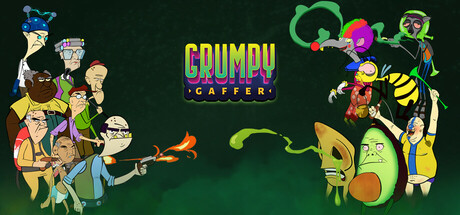
Grumpy Gaffer is probably the scrappiest game in this lineup, and that’s part of its appeal. The setup is wonderfully petty: an old man wants to enjoy sudoku in peace, but his irritating neighbors keep ruining the vibe, so now it’s time to clone, mutate, and scare them off.
The actual game sounds like a compact strategy-defense hybrid with drag-and-drop controls, 20 characters, around 20 power-ups, 90 levels, endless mode, nightmare mode, a weekly coliseum score chase, and, because the joke would be incomplete otherwise, a fully functional sudoku mode. That’s a lot of game stapled onto a $0.99 release.
The player feedback is sparse and casual-“interesting game,” “didn’t think i would enjoy this game”-but that can be a good sign for inexpensive oddities like this. It suggests people are coming in with low expectations and leaving pleasantly surprised. At 123 reviews and 94.3% positive, Grumpy Gaffer looks like the kind of budget strategy snack that spreads because one friend says, “This is way better than it has any right to be.”
The caution is obvious: this sort of feature pile can feel messy if the core loop isn’t sharp. But at this price, a weird, slightly cranky defense game with sudoku side content is at least memorable. On Steam, memorable counts for a lot.
7) WonderLang Polyglot

Educational games usually fail in one of two ways: they’re barely games, or they bury the learning under so much friction that neither side works. WonderLang Polyglot is interesting because it’s at least trying to make language learning the actual adventure loop.
This is the all-in-one version of WonderLang, bundling multiple language campaigns into a quest-driven RPG structure with dialogue, exploration, puzzles, and “spaced repetition combats.” That phrase could sound grimly edtech, but the better pitch is in the player comments: one reviewer with 83 hours says it finally makes a real game out of language learning, and another says it offers worthwhile practice even if it won’t make someone fluent on its own. That’s the right level of promise. Not miracle cure, not gimmick-just a more engaging way to practice.
There’s also a useful complaint in the reviews: voice-input recognition apparently isn’t great. That matters because once you build a learning game around active participation, bad recognition can sour the whole experience fast. Still, the fact that the criticism is so specific is encouraging. Players aren’t saying the concept is broken; they’re saying one part of the implementation needs work.
At $39.99, WonderLang Polyglot is easily the toughest sell here. That price asks for commitment. But it also explains why 43 reviews and 88.4% positive feels meaningful instead of flimsy. People aren’t impulse-buying this as a joke. They’re showing up because the fantasy-an RPG that makes language practice less dead-eyed than another app streak-actually matters to them.
The Verdict
These aren’t seven versions of the same Steam success story. That’s the point.
- Rosalie has the best immediate social hook.
- BAIONLENJA looks the most likely to become a cult favorite if its Early Access roadmap holds up.
- R.A.T#200 is the easiest free gamble.
- Blackjack Roulette has the strongest “this sounds dumb until you play it” energy.
- Undercroft Warriors is the clean budget action pick.
- Grumpy Gaffer feels like a proper bargain-bin surprise.
- WonderLang Polyglot is the most niche, but also the most ambitious.
If I had to bet on the one with the most durable word-of-mouth, it’s BAIONLENJA. If I had to recommend the one most likely to create instant stories with friends, it’s Rosalie. And if you just want to poke at something unusual without spending anything, R.A.T#200 is right there.
Which of these would you actually install first: the pedal-car argument generator, the speed-demon FPS, or the rat escape act?