Early Access has a reputation problem. On one side, it’s where some of PC gaming’s best indies quietly become monsters; on the other, it’s where “unfinished” can stretch from 12 months to more than a decade. The weird part is both are true at once, and the numbers here make that impossible to ignore.
Across Steam, the market stats are brutal: 83,115 total games tracked, 3,851 new this week, and an average review score of 76.0%. Against that backdrop, the biggest Early Access indies aren’t just surviving with “pretty good” sentiment — they’re posting 94.1% to 97.4% positive scores while pulling owner estimates from 7,500,000 to 75,000,000. That’s not a niche incubator anymore. That’s a parallel hit-making machine.
Early Access stopped being a warning label
The old stereotype says Early Access is where promising games go to stall out. Sometimes, sure. But look at the heavy hitters in this sample and you get a different picture: players are clearly willing to buy unfinished games if the core fantasy already works on day one.
Take Phasmophobia. At $13.99, it has 813,987 reviews with 95.6% positive and an estimated 15,000,000 owners. For a co-op horror game from Kinetic Games, those are absurd numbers, especially when the pitch is still fundamentally simple: 4-player ghost hunting, over 20 ghost types, more than 10 haunted locations, and voice recognition that lets the ghosts “listen.”
The player reviews included here are almost comically stripped down — “Lowkey just a fun game,” “scary ghost woooooooooooooooooo,” “OoooOOOooo spooky” — but that actually fits. Phasmophobia works because the fantasy is instantly legible. You don’t need a roadmap presentation to understand why 15,000,000 people showed up for a $13.99 co-op scare machine.
Then there’s Valheim, still one of the clearest examples of Early Access done right and wrong at the same time. It’s $9.99, sits at 528,835 reviews with 94.1% positive, and also carries an estimated 15,000,000 owners. That price-to-scale ratio is ridiculous value, and the game’s 1-10 player co-op, procedural world, building systems, bosses, and cross-platform PC support on Windows, Mac, and Linux make it unusually broad for an indie survival RPG.
But the criticism is right there in the player feedback too: “never ending early access.” That line matters because Valheim has already given players hundreds of hours of value, yet long development timelines still wear down goodwill. Early Access can be generous and exhausting at the same time.
The winning pattern: nail one fantasy, then expand
The strongest Early Access games in this group all lock onto a fantasy that players can describe in one sentence. That matters more than polish slogans.
- Phasmophobia sells “co-op ghost hunting” for $13.99 with 813,987 reviews and 95.6% positive.
- Valheim sells “co-op Viking survival” for $9.99 with 528,835 reviews and 94.1% positive.
- Project Zomboid sells “hardcore zombie survival sandbox” for $13.39 with 438,851 reviews and 94.1% positive.
- Palworld sells “creature collecting plus survival automation” for $22.49 with 416,933 reviews and 94.2% positive.
- BeamNG.drive sells “soft-body crash sim” for $19.99 with 322,278 reviews and 97.4% positive.
That clarity is doing a lot of work. Nobody is buying these because they love the phrase “Early Access.” They’re buying because each game already delivers a specific toybox that feels worth the asking price before 1.0 ever arrives.
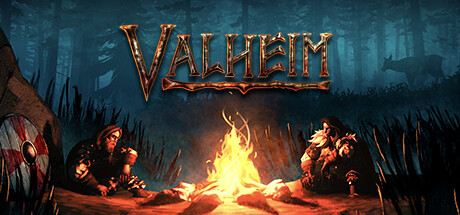
Valheim is maybe the cleanest version of this. Its building, sailing, boss progression, food buffs, and biome-driven exploration all reinforce the same loop. One review calls it “Good comfy survival game if you’re looking for something akin to Minecraft, with a little more of a survival twist,” and that’s more useful than most marketing blurbs.
The other pattern: players forgive rough edges, not drift
There’s a reason these games can stay in Early Access for years and keep their scores high. Players will tolerate missing pieces, balance swings, and rough onboarding if the game keeps producing stories.
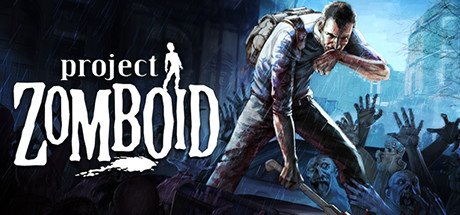
Project Zomboid is the poster child for this bargain. It’s $13.39, has 438,851 reviews at 94.1% positive, and an estimated 15,000,000 owners despite launching back on Nov 8, 2013. That’s older than the 2015 cutoff you’d want for most trend pieces, but it’s impossible to discuss the state of Early Access without mentioning the game that has been stress-testing the format for more than a decade.
The included player comments get at the tradeoff perfectly:
- “The game is brutal, and theres permadeath.”
- “Tedious but super fun.”
- “very fun but takes time to now the what the helll your doing”
- “the devs like to make their game even more of a hassle with updates”
That’s not a clean onboarding story. But it is a coherent one. Project Zomboid wins because its friction feels intentional rather than accidental. If a game is harsh, meticulous, and a little enraging by design, players accept that. What they don’t accept is a game that loses focus, chases trends, or stops feeling like it knows what it wants to be.
Hype can carry a launch, but systems carry the long tail
Palworld is the loudest modern example here. At $22.49, it has 416,933 reviews, 94.2% positive sentiment, and an estimated 75,000,000 owners. That owner estimate is enormous — 5 times Phasmophobia, Valheim, or Project Zomboid at 15,000,000, and 10 times the 7,500,000 estimate listed for BeamNG.drive.
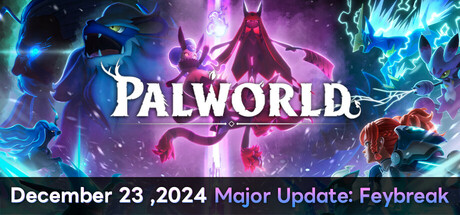
The obvious risk with Palworld was that it could have been a meme launch: lots of screenshots, lots of discourse, then a hard fade. Instead, the player comments here point to depth in “building, crafting, and breeding dynamics,” plus repeated mentions of patches that “melhoram a experiência.” That’s the part that matters. Viral attention gets you the first 1,000,000 eyeballs; systems get you the 416,933 reviews.
That said, this is where skepticism belongs. Palworld is priced highest in this set at $22.49, and the game’s appeal leans heavily on a giant mashup of survival, automation, exploration, co-op, and creature collection. That can be thrilling, but it can also make development sprawl. Big feature stacks are fun until they start competing for oxygen.
The quiet champion might be the purest Early Access success
If you want the least debatable “it just works” case, it’s BeamNG.drive. At $19.99, it posts 97.4% positive reviews — the highest score in this sample — across 322,278 reviews, with an estimated 7,500,000 owners in one listing. No co-op gimmick, no survival crafting treadmill, no lore dump. Just a vehicle sim with soft-body physics so convincing that crashing is the feature, not the failure state.

That focus is why it ages so well in Early Access. BeamNG.drive promises “a dynamic soft-body physics vehicle simulator capable of doing just about anything,” and then backs it up with dozens of customizable vehicles, 12 open environments, scenarios, free roam, and a simulation core that players clearly trust. When your central tech is the attraction, iterative development feels less like delay and more like compounding value.
There’s also a useful lesson here for players: games with simulation-heavy foundations often make safer Early Access buys than content-hungry games. If the fun comes from systems interacting — physics, survival rules, emergent co-op chaos — a game can stay compelling long before every planned feature lands.
What these success stories have in common
These games are wildly different, but the numbers line up around a few common patterns.
- They start from a strong hook, not a vague promise.
- Phasmophobia: 95.6% positive, 813,987 reviews, $13.99.
- BeamNG.drive: 97.4% positive, 322,278 reviews, $19.99.
- They offer replayable systems instead of one-and-done campaigns.
- Valheim supports 1-10 players with procedural worlds.
- Project Zomboid leans on sandbox customization, permadeath, and persistent survival stories.
- They justify their price early.
- Valheim at $9.99 is still one of the strongest value propositions in PC gaming.
- Project Zomboid at $13.39 and Phasmophobia at $13.99 both sit in the sweet spot where players forgive roughness if the loop is sticky.
- They keep players talking in plain language.
- “Lowkey just a fun game.”
- “Tedious but super fun.”
- “Better than pokemon.”
- Crude? Yes. Useful? Also yes.
The less flattering shared trait is that none of this guarantees a clean path to 1.0. High review scores can coexist with development fatigue. Massive owner counts can coexist with player anxiety about timelines. Early Access success is not the same thing as Early Access closure.
Advice for players thinking about an Early Access buy
If you’re considering an Early Access game, the best question isn’t “Will this become amazing later?” It’s “Is this already worth the money today?”
Use this sample as the benchmark:
- If a game costs around $10 to $14 like Valheim ($9.99), Project Zomboid ($13.39), or Phasmophobia ($13.99), the current build should already support dozens of hours, not just a neat concept.
- If a game costs more like BeamNG.drive ($19.99) or Palworld ($22.49), it should have either exceptional systems depth or unusually strong content breadth right now.
- Review percentage matters, but review count matters too.
- 95.6% positive across 813,987 reviews for Phasmophobia is a different level of proof than a tiny cult hit with only a few hundred ratings.
- 97.4% across 322,278 reviews for BeamNG.drive is almost absurdly strong for a game still wearing the Early Access tag.
And read the complaints, not just the praise. “Never ending early access” tells you something real about Valheim. “Tedious but super fun” tells you exactly what kind of patience Project Zomboid demands. Those aren’t red flags by themselves; they’re fit checks.
The Verdict
Early Access in 2026 looks less like a gamble and more like a contract. Players will absolutely fund unfinished indie games — sometimes to the tune of 15,000,000 or even 75,000,000 owners — but only if the game already delivers a memorable, repeatable core experience.
The good news is that the best examples are genuinely great. Phasmophobia, Valheim, Project Zomboid, Palworld, and BeamNG.drive prove that unfinished doesn’t have to mean unstable, shallow, or disposable.
The bad news is that Early Access still rewards patience unevenly. Some games evolve into all-timers; some just get older in public. So when you buy in, buy the game that exists, not the dream pitch in your head.
Which Early Access indie has actually earned your trust — and which one has tested it a little too hard?