Early Access used to sound like a polite excuse for “come back later.” Now it’s where some of PC gaming’s biggest indie obsessions live for years, sometimes long enough to make the label feel almost meaningless.
That doesn’t mean the risk is gone. It means players need a better filter. The best Early Access games aren’t just promising ideas with a roadmap attached - they already deliver a strong fantasy right now, and they make the unfinished parts feel like evolution rather than absence.
Take Phasmophobia. Four years into Early Access, it’s no longer surviving on novelty alone. The hook still works because the fiction and the mechanics reinforce each other perfectly: you walk into a haunted location with ghost-hunting gear, try to identify what’s stalking the place, and slowly realize the thing listening to you might also be learning how scared you are.
That voice-recognition angle matters. Plenty of co-op horror games are funny with friends; Phasmophobia is effective because it turns your real voice into part of the risk. Its full description leans hard on that, and it’s easy to see why it stuck: over 20 ghost types, more than 10 haunted locations, and a structure that makes every run about interpretation, not just survival. At $13.99 with 815,133 reviews and a 95.6% positive score, this is what a mature Early Access success looks like: not “almost there,” but functionally essential already.
The lesson there is simple. A good Early Access game does not ask you to imagine the fun. It lets you feel it immediately.
Lethal Company understands that too, though in a very different register.

Lethal Company is one of the clearest examples of a modern Early Access hit because its pitch is brutally clean: go to abandoned moons, grab scrap, meet quota, panic. That premise is thin on paper, but the play loop has teeth. The ship radar, remote doors, scavenging pressure, and rising nighttime danger create a co-op rhythm where half the fun is competent teamwork and the other half is your squad collapsing into chaos at exactly the wrong moment.
One recent review calls it “easy to learn, hard to master,” which gets at why this one exploded. The randomized interiors and enemy setups give it that roguelike unpredictability without burying the game in systems bloat. At $7.99, 504,001 reviews, and 97.0% positive, it’s a reminder that Early Access thrives when the core loop is legible in ten minutes and memorable for months.
That’s also why R.E.P.O. looks so healthy so quickly.

R.E.P.O. takes co-op horror and swaps some of the usual “run from monster” energy for a more tactile kind of stress. You and up to five friends use a physics-based grabbing tool to haul valuable objects out of terrifying spaces, with the added cruelty that your loot can be fragile, awkward, and hilariously easy to fumble. Heavy pianos and delicate ceramics are very different problems when everything is governed by physics and your team is one bad decision away from catastrophe.
That’s a smart Early Access hook because it creates stories instantly. The monsters matter, but the object handling is the real signature - it gives the game friction you can feel. At $9.99 with 369,090 reviews and 96.2% positive, R.E.P.O. already has the kind of strong identity many fully launched games never find.
So yes, co-op horror is clearly one of Early Access’s safest bets. But it’s not because players will buy any spooky prototype with proximity chat. It works when the game adds a specific social pressure: speaking to ghosts, hauling scrap under quota, or transporting valuables without smashing them to pieces.
That same “strong fantasy first” rule applies outside horror. Valheim is still one of the best arguments for buying a survival game before 1.0 because its world already feels complete where it counts.
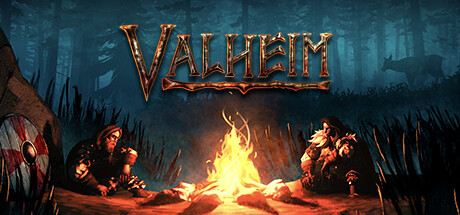
Valheim sells the Viking afterlife fantasy with unusual confidence. Sailing into unknown biomes, building longhouses with structural integrity, preparing food and meads before a boss fight - these details make the survival grind feel purposeful rather than procedural. One player review calls it a “good comfy survival game” with more of a survival twist than Minecraft, which is a fair read: the game is gentler than the genre’s meanest examples, but not soft.
Still, Valheim also shows the other side of Early Access success: the longer a game stays there, the more some players start to bristle at the label itself. One review bluntly says “never ending early access.” That complaint matters, even against 528,835 reviews and a 94.1% positive score. Players will forgive incompleteness; they get less forgiving when the state of incompleteness starts to feel permanent.
Project Zomboid lives in that same tension, just with a harsher personality.
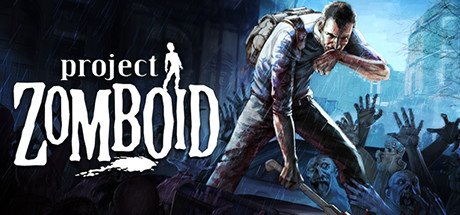
Project Zomboid is the kind of Early Access game that survives because it offers a simulation fantasy too committed to fake. It isn’t trying to make zombie survival slick. It wants you to think about line of sight, noise, depression, boredom, hunger, illness, barricading windows, and the dumb little routines that keep a life together while the world falls apart.
The player feedback here is revealing: “Tedious but super fun,” “brutal,” “very fun but takes time to know what the hell you’re doing.” That’s not accidental friction; that is the product. At $13.39 with 441,062 reviews and 94.1% positive, Project Zomboid proves an important point about Early Access: some games are worth buying not because they’re polished, but because their rough edges are attached to real depth.
Then there are the games using Early Access less as a rescue float and more as a live laboratory. ULTRAKILL is a good example.
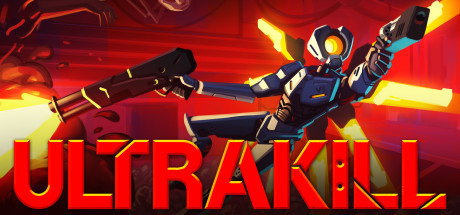
ULTRAKILL already feels more vivid than most finished shooters. It mashes together old-school FPS speed, style scoring, and a healing system built around bathing in enemy blood. That sounds like adolescent nonsense until you play it and realize how elegantly it pushes aggression. Stand still and you die; move beautifully and the game starts to sing.
Its recent review snippets are mostly jokes, but that almost suits the game. ULTRAKILL has the confidence of something players already treat as canon. At $17.49 with 219,186 reviews and 97.4% positive, it shows how Early Access can work for games whose real value lies in iteration, tuning, and gradually expanding a combat language that already rips.
BeamNG.drive makes a similar case from the simulation side.

BeamNG.drive is still in Early Access because simulation is a bottomless pit. There is always another vehicle behavior to refine, another scenario to build, another environment to tune. But this is not a game surviving on technical aspiration. The soft-body physics already create the fantasy people came for: crashes that feel violent, suspension that actually matters, and open-ended vehicle experimentation that turns simple driving into sandbox play.
The recent reviews are almost comically direct - “you can crash cars. and like REALLY realistically.” Crude wording, accurate point. At $19.99 with 383,704 reviews and 97.4% positive, BeamNG.drive is one of the clearest examples of an Early Access game that feels justified because the genre itself rewards endless refinement.
Not every huge Early Access hit is equally convincing, though. Palworld is a real success story, but also a useful caution.
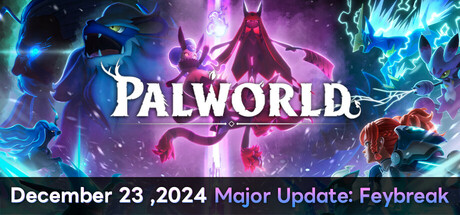
Palworld absolutely has a hook: creature collecting meets open-world survival crafting, with Pals handling farming, factories, mounts, breeding, and combat. It throws enough systems at you that the game can feel surprisingly rich, and player reviews back that up by praising its building, crafting, breeding depth, and solo/co-op flexibility. At $22.49 with 416,933 reviews and 94.2% positive, there’s obviously real appetite here.
But Palworld also represents a common Early Access temptation: the oversized pitch. It wants to be monster battler, automation game, survival sandbox, co-op adventure, and chaos generator at once. Sometimes that ambition is thrilling. Sometimes it means the game’s identity depends on how much mess you’re willing to sort through. If you’re buying into Early Access, that’s the kind of distinction worth making before you click purchase.
And then there’s BattleBit Remastered, which is maybe the most useful warning sign in this group.
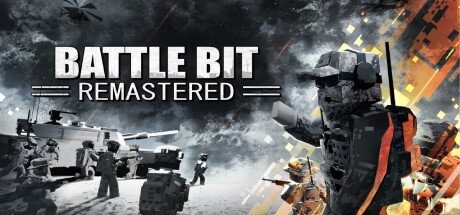
BattleBit Remastered had a killer pitch: low-poly warfare, near-fully destructible maps, vehicles, open VOIP, and 254-player servers. That’s not just marketable - it’s instantly legible. You know what fantasy it’s selling before the trailer ends.
But recent player sentiment cuts against the success story. Multiple reviews complain that updates slowed or stopped and describe the game as abandoned. Even with 145,992 reviews, an 82.0% positive rating is noticeably shakier than the rest of this list. Early Access doesn’t only test a game’s design; it tests whether players still believe the game is moving. Once that belief cracks, the label starts feeling less like openness and more like cover.
What Actually Makes Early Access Worth It?
Across these games, a few patterns keep showing up:
- The best ones have a crystal-clear hook from day one.
- Phasmophobia: identify the ghost while fear scrambles teamwork.
- Lethal Company: hit quota or die trying.
- R.E.P.O.: move valuable junk through horror spaces without breaking it.
- Strong social friction helps.
- Co-op games thrive when communication itself becomes gameplay, not just logistics.
- Deep sims can survive longer in Early Access than most genres.
- Project Zomboid and BeamNG.drive get away with long tails because players expect ongoing complexity, not a neatly wrapped campaign.
- “More systems” is not the same as “better Early Access.”
- Palworld works because the creature-labor fantasy is immediately funny and useful, not just because the feature list is long.
- Momentum matters.
- BattleBit Remastered shows how quickly enthusiasm sours when players feel development has stalled.
Advice Before You Buy an Early Access Game
If you’re considering an EA purchase, ask a few blunt questions:
- Is the current version already fun without future promises?
- Is the main fantasy obvious and satisfying in the first session?
- Do player reviews talk about memorable play, or mostly potential?
- Are complaints about difficulty and friction actually signs of depth, as with Project Zomboid, or signs of drift?
- Are you buying a game, or buying into a roadmap?
That last one is the big one. Buy the game that exists. If future updates arrive, great. If they need to arrive for the purchase to make sense, you’re gambling.
The Verdict
Early Access is no longer a niche corner for rough prototypes. It’s a normal home for some of indie PC gaming’s biggest, strangest, and best games. But the label only means something useful when you treat it as a design question, not a trust fall.
The winners here already know what they are. Phasmophobia, Lethal Company, Valheim, Project Zomboid, ULTRAKILL, BeamNG.drive, and R.E.P.O. all sell a tangible experience right now, not just a future one. The weaker cases aren’t necessarily bad games - they’re the ones where ambition, pacing, or support starts to blur the promise.
So when you look at an Early Access page, what are you really buying: a great unfinished game, or a very polished wish?