Steam’s indie market isn’t expensive, and it isn’t short on supply. The striking number is this: out of 78,353 enriched indie games, the average price is just $3.61, while 1,908 are free and 5,850 are paid. That points to a storefront where cost is rarely the main barrier. Discovery is.

If the average review score across the market sits at 77.1%, the store isn’t drowning in total junk either. It’s drowning in volume. With 83,123 total games tracked and 78,634 marked as new this week in the market snapshot, the bigger story is saturation: players are staring at a wall of cheap, often decent indie games, and most of them will never get a real shot.
The $3.61 indie economy is brutal
Averages can hide a lot, but this one is revealing. $3.61 is low enough that price resistance should be minimal for most buyers, especially compared with the old premium-indie model where $14.99 to $24.99 used to be normal for a breakout.
That matters because it shifts the conversation. If indies are averaging $3.61, then “players won’t buy indies” is the wrong takeaway. Players clearly will buy them. The harder truth is that a lot of developers are pricing low just to get noticed, and low pricing alone still doesn’t solve visibility.
The free-to-paid split sharpens that point:
- 1,908 free indie games
- 5,850 paid indie games
That’s 7,758 games with pricing data in this snapshot. Free games make up a meaningful chunk of that group, but paid games still heavily outnumber them. Steam’s indie scene hasn’t turned into a pure free-to-play race. It’s more like a bargain bin the size of a continent.
Cheap is normal now, not a hook
A few years ago, “only $4.99” could be a pitch. In a market where the average is $3.61, that line barely registers.
This is where a lot of indie marketing quietly falls apart. If nearly everyone is cheap, then cheap stops being special. A developer can undercut to $2.99, $1.99, or even free, but they’re competing in a storefront already packed with low-cost options.
That doesn’t mean pricing is irrelevant. It means pricing is now baseline positioning, not differentiation.
You can see the contrast by looking at successful indie games that broke through on identity rather than just price. HoloCure - Save the Fans! has built a huge audience as a free game, but “free” isn’t the whole story. It also has 41,372 reviews and a 98% score, which is the kind of overwhelming player approval that turns a free download into a phenomenon instead of background noise.
Free gets the click. 41,372 reviews at 98% gets the momentum.
High scores are common enough that they’re not enough
The overall market average is 77.1%. That’s solid, not disastrous. It suggests the median indie on Steam is more competent than the doom-and-gloom version of the platform would have you believe.
But “solid” is also the problem. If the average game is sitting around the high-70s, then being “pretty good” doesn’t separate you much. On Steam, a game doesn’t just need to be good. It needs to be obviously, instantly, algorithmically legible.
That’s why the standout games tend to post absurd approval numbers, not merely respectable ones. Brotato is a good example: 90,065 reviews and a 96% score. Those aren’t healthy numbers. They’re monster numbers.
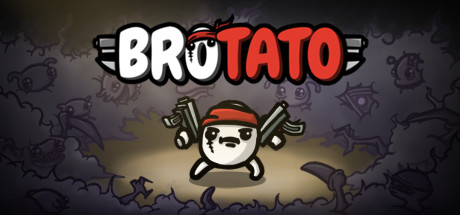
And they matter because once a game reaches that level, it stops competing like a normal indie. It turns into a feedback loop:
- high review count signals trust
- high percentage signals quality
- strong conversion drives visibility
- visibility drives more reviews
That loop is merciless. It rewards winners hard and leaves the merely decent behind.
Steam isn’t short on quality. It’s short on attention
This is the cleanest read from the numbers. If the average score is 77.1%, and the average listed price is $3.61, then the average indie is both affordable and at least reasonably liked.
So why do so many games disappear? Because attention is scarce in a way price can’t fix.
Look at Halls of Torment: 27,797 reviews, 96% positive, $4.99 price. That’s a game priced right in the bargain zone, but its success didn’t come from being the cheapest thing on the shelf. It came from hitting a concept players understood instantly and executing it well enough to sustain 27,797 reviews at 96%.

That’s the pattern worth paying attention to. In a market flooded with low-cost releases, the games that break through tend to combine three things:
- a pitch you understand in seconds
- review sentiment well above the 77.1% average
- enough early traction to trigger Steam’s recommendation machinery
Without that third piece, even strong games can stall.
Free games are a pressure valve, not a guaranteed path
The 1,908 free games in the pricing snapshot matter because they show how many developers are trying to remove friction entirely. If players hesitate at $3.61, the logic goes, then maybe $0 is the answer.
Sometimes it is. HoloCure - Save the Fans! proves free can work at a massive scale with 41,372 reviews and 98% positive reception.
But free also creates a different problem: the barrier to entry falls for players, while the barrier to sustainability rises for developers. Free only really works when there’s a plan behind it, whether that’s community building, eventual monetization elsewhere, or sheer breakout momentum.
That’s why “just make it free” is weak advice. In a storefront with 1,908 free games already tracked here, free is not a shortcut. It’s a crowded lane.
The middle is getting squeezed
The data points toward a Steam ecosystem where the extremes are easiest to understand:
- breakout hits with giant review counts and elite scores
- tiny releases priced low enough to feel disposable
The dangerous place is the middle. A competent paid indie with a fair price and decent reviews can still get buried, because “competent,” “fair,” and “decent” are everywhere.
Take Backpack Battles, which has 22,556 reviews and a 91% score. Those are excellent numbers by any sane standard. But on Steam, that game still lives in a market where standout performance gets defined by edge cases like 90,065 reviews at 96% for Brotato or 41,372 reviews at 98% for HoloCure - Save the Fans!.
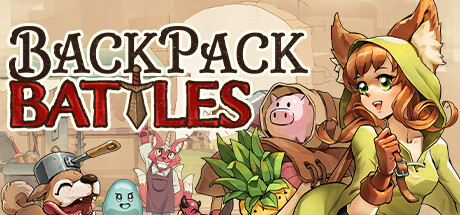
That’s the squeeze. To rise above the noise, a game often needs numbers that would have looked absurdly successful in a smaller market.
“New this week” shows how impossible curation has become
The market stats list 78,634 as new this week against 83,123 total games tracked. Whatever the exact composition behind that snapshot, the useful takeaway is simple: the feed is overwhelming.
For players, that means wishlists and recommendation systems matter more than storefront browsing. For developers, it means launch week is less like opening night and more like being dropped into traffic.
That environment favors games with immediate readability. Tiny Rogues fits that mold well: 18,286 reviews, 96% positive, $9.99. It’s not the cheapest game in this piece, and that’s important. It shows that players will absolutely pay above the $3.61 average when the concept, execution, and word of mouth are strong enough.
So no, the answer isn’t always lower pricing. Sometimes the answer is making a game people can describe to a friend in one sentence.
The harsh takeaway: Steam’s indie floor is decent, but the ceiling hogs the oxygen
There’s a tendency to talk about Steam indie games as if most are broken, cynical cash grabs. The average review score of 77.1% doesn’t support that. The average price of $3.61 doesn’t support the idea that indies are overcharging either.
What the numbers do support is a market with too many acceptable options and too few attention slots. That’s a very different problem.
And it creates some ugly incentives:
- lower prices to stand out in a market where low prices are already standard
- chase hyper-readable hooks over slower-burn originality
- rely on review velocity because sentiment alone isn’t enough
- treat launch visibility as existential, because it probably is
That last point is the most important. A game can be good, cheap, and honestly made, and still fail because “good, cheap, and honest” describes too much of the field.
The Verdict
The big lesson from 78,353 enriched indie games is that Steam’s core indie problem isn’t quality or affordability. It’s saturation.
An average indie price of $3.61 and an average review score of 77.1% should be good news for players. You’re surrounded by inexpensive games that are, on balance, at least pretty decent. But for developers, those same numbers are a warning: being decent and cheap is now the minimum, not the pitch.
The winners aren’t just better. They’re clearer, faster to grasp, and strong enough to turn early reviews into algorithmic lift. Everyone else is fighting for scraps in a market that has never been more crowded.
So here’s the real question: if price isn’t the barrier anymore, what actually makes you click on an indie game in 2026?