
Steam got 3,449 new enriched games this week, and 3,447 of them support Windows. That’s not a market trend so much as a monopoly with a courtesy nod to everyone else.
Mac support shows up in 1,160 of those games, and Linux in 830. That means roughly a third of this week’s releases bothered with Mac, and less than a quarter shipped with Linux support. If you play indies outside Windows, you’re still living in the land of “better than it used to be” rather than “actually equal.”

The good news: some of indie PC’s best games do treat platform support like a feature, not an afterthought. The bad news: plenty of devs still don’t, and the numbers make that painfully obvious.
The platform split is lopsided, but not meaningless
Out of 83,115 total tracked games, this week’s 3,449 enriched releases give us a decent snapshot of how indie developers are shipping right now.
Here’s the blunt version:
- Windows: 3,447 games
- Mac: 1,160 games
- Linux: 830 games
That gap matters because platform support isn’t just a box on the store page. It determines whether a game is even part of the conversation for a chunk of players. A Linux or Mac user doesn’t care that your game has immaculate vibes if the install button may as well say “not for you.”
And yes, Windows being near-universal is expected. But the drop from 3,447 Windows releases to 1,160 Mac releases is massive, and the slide to 830 Linux releases is even steeper. Indie developers are often small, overstretched teams, so this isn’t always laziness. Still, from the player side, intent doesn’t launch executables.
The best cross-platform indies tend to be the ones with long tails
If you want proof that broad platform support can coexist with real success, look at the games that have turned into long-term fixtures rather than one-week blips.
Stardew Valley supports Windows, Mac, and Linux, costs $7.49, sits at 98.5% positive from 987,627 reviews, and has an estimated 35,000,000 owners. That’s not niche goodwill; that’s industrial-scale affection.
One of the included player reviews has 397 hours and calls it “an actually relaxing game,” while another with 141 hours describes bouncing off it at first, then binge-playing for a month. That kind of retention matters. Cross-platform support helps, but it also works because the game itself is a universal solvent: farming, dating, co-op, and enough structure to guide you without choking you.
The feature set helps too:
- Single-player
- Multiplayer
- Co-op
- Online Co-op
- LAN Co-op
- Shared/Split Screen Co-op
That’s a lot of ways to play a $7.49 game. When people talk about accessibility in indies, they often mean difficulty sliders or controls. Platform reach belongs in that conversation too.

Then there’s RimWorld, another Windows, Mac, Linux release, priced at $27.99, with 235,703 reviews at 97.9% positive and an estimated 7,500,000 owners. Different genre, same lesson: if your game is built to last, meeting players on multiple platforms is a smart bet.
Its player reviews are the usual RimWorld mix of chaos and devotion. One has 10,004 hours and says, in very understated fashion, “really good game,” praising the range of choices and mod support. Another with 418 hours simply points to the mods. That’s not elegant criticism, but it’s useful. A game this systemic benefits from being available wherever strategy sickos live.
Linux support is still a signal
Linux support is only present in 830 of this week’s 3,449 enriched games, so when a small indie includes it, it stands out.
Lost Wiki: Kozlovka is a good example. It supports Windows and Linux, costs $4.49, has 194 reviews at 97.9% positive, and an estimated 10,000 owners. That’s tiny next to the giants, but the support choice feels deliberate.

This is a compact mystery game about digging through a Wikipedia-like database in a 90s Eastern European setting. The reviews make the pitch pretty clean:
- One player with 1 hour called it an “enjoyable little puzzle game” with satisfying closure.
- Another with 2 hours said it’s “a bit short but solid.”
- A negative review with 2 hours argued the wiki concept loses steam after the first few questions and turns repetitive.
That criticism matters. At $4.49, a short game can absolutely be worth it, but only if the core idea keeps evolving. Even so, a 97.9% score from 194 reviews says most players think the atmosphere, pacing, and concept land. For Linux players especially, this kind of niche, text-driven indie is often where platform support feels most thoughtful rather than obligatory.
Mac and Linux players often eat best in slower genres
There’s a pattern in the games here that isn’t exactly shocking, but it is revealing. The strongest multi-platform support shows up in genres that are easier to support across hardware setups and control schemes.
The clearest examples:
- Stardew Valley: farming RPG/sim, Windows/Mac/Linux
- RimWorld: colony sim/strategy, Windows/Mac/Linux
- Blackwell Epiphany: adventure, Windows/Mac/Linux
- Lost Wiki: Kozlovka: mystery/puzzle indie, Windows/Linux
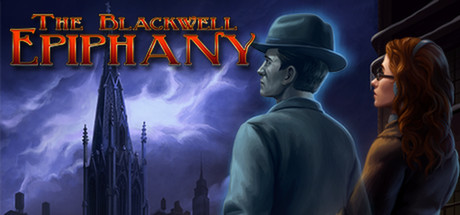
Blackwell Epiphany is older than the 2015 cutoff, so it’s not the centerpiece here, but it’s worth mentioning as a reminder that some indie traditions got this right years ago. It supports Windows, Mac, and Linux, costs $2.99, and has 988 reviews at 97.8% positive. Wadjet Eye’s adventure games have long understood that if your game is built on writing, atmosphere, and puzzle logic, locking out non-Windows users is just leaving money and goodwill on the table.
The common thread isn’t “retro graphics” or “small scope.” It’s design fit. Mouse-driven sims, adventure games, and lower-spec indies tend to travel better across platforms. That’s not a moral victory; it’s just practical engineering.
What players should take from this
If you’re a Windows player, you effectively get the whole storefront. 3,447 out of 3,449 new enriched games this week are available to you. Must be nice.
If you’re on Mac, your pool drops to 1,160. If you’re on Linux, it drops to 830. That means platform support itself becomes part of curation. You’re not just asking “is this good?” You’re asking “did the developer even invite me in?”
The upside is that some of the very best indies are unusually good at meeting players where they are:
- Stardew Valley proves a game can be massive, cheap, and fully cross-platform.
- RimWorld shows deep, systems-heavy PC design doesn’t need to be Windows-only.
- Lost Wiki: Kozlovka shows even a 10,000-owner niche release can make the extra effort.
- Blackwell Epiphany is a reminder that adventure indies have been quietly serving Mac and Linux players for years.
There’s also a less cheerful takeaway: a lot of indie discourse still treats platform support as trivia. It isn’t. For Mac and Linux users, it decides whether a recommendation is useful or just decorative.
The Verdict
Platform support in indie games is better than the old “Windows only, deal with it” era, but the market is still wildly uneven.
The numbers are stark:
- 3,447 of 3,449 new enriched games support Windows
- 1,160 support Mac
- 830 support Linux
So yes, Windows still runs the show. But the indies with real staying power often punch beyond that default. Stardew Valley and RimWorld aren’t beloved because they support more platforms, but their willingness to do so absolutely helps explain their reach. And smaller games like Lost Wiki: Kozlovka show that cross-platform support can be part of what makes a niche indie feel player-friendly from day one.
If you’re shopping outside Windows, the storefront is still narrower than it should be. But when developers make the effort, the results are often some of the smartest, stickiest indies on PC.
What indie game have you loved partly because it actually bothered to support your platform?